East West Rail
Pioneering Railway 'Batterification' & The Smart Energy Corridor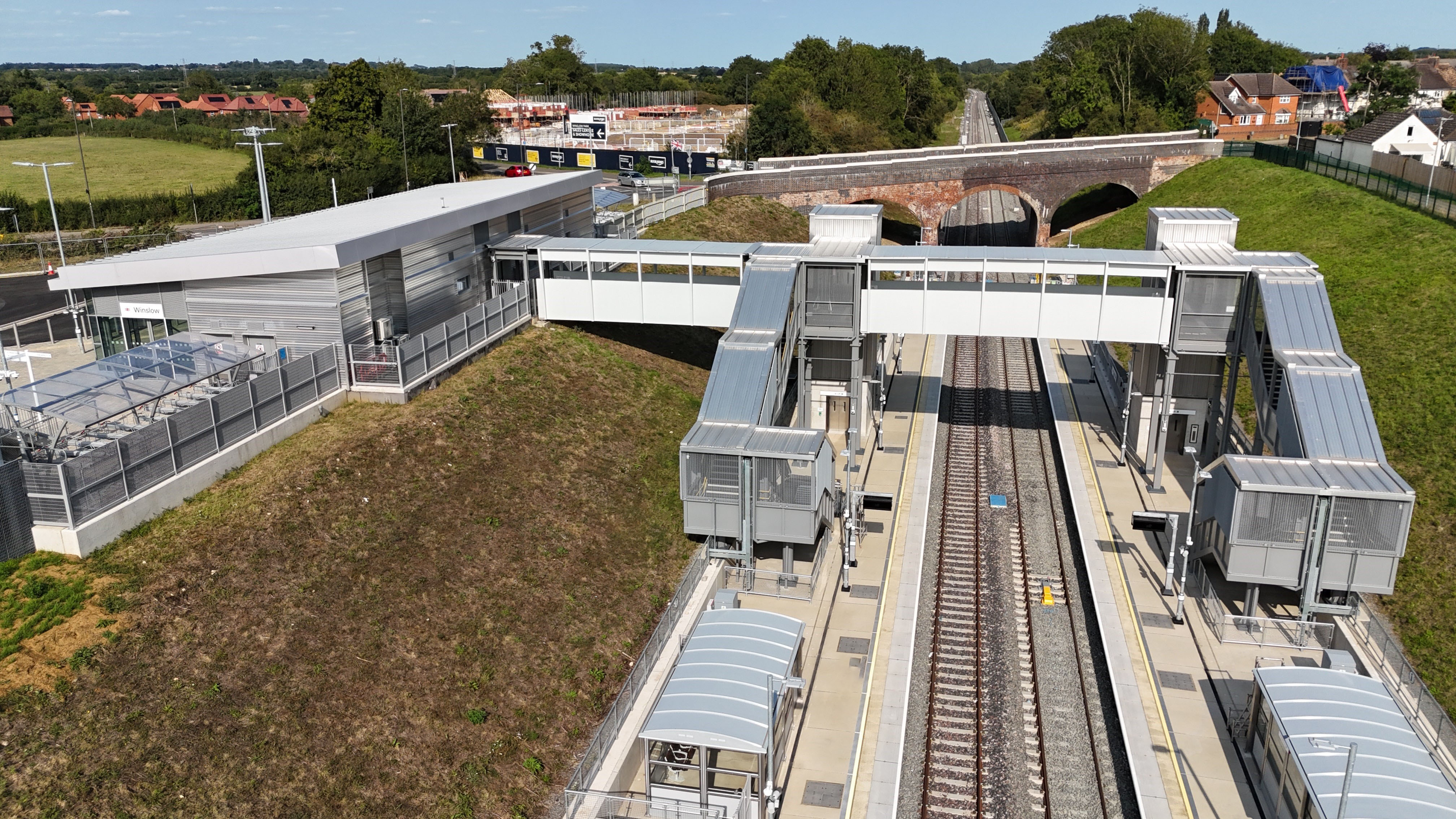
Demonstrating the transferability of our smart energy vision to national infrastructure, Expert Alliance played a leading role in proposing a radical new approach to railway electrification. In a seminal 2021 document submitted to East West Rail, the Government-owned company responsible for reopening the Oxford to Cambridge railway, we outlined a concept that completely reimagined the traditional, heavily engineered railway.
A Profound Shift From Legacy Thinking
Instead of full, continuous Overhead Line Electrification (OLE) from Oxford to Cambridge (which carried an estimated capital expenditure of up to £750 million) we proposed treating the railway as a "smart energy corridor."
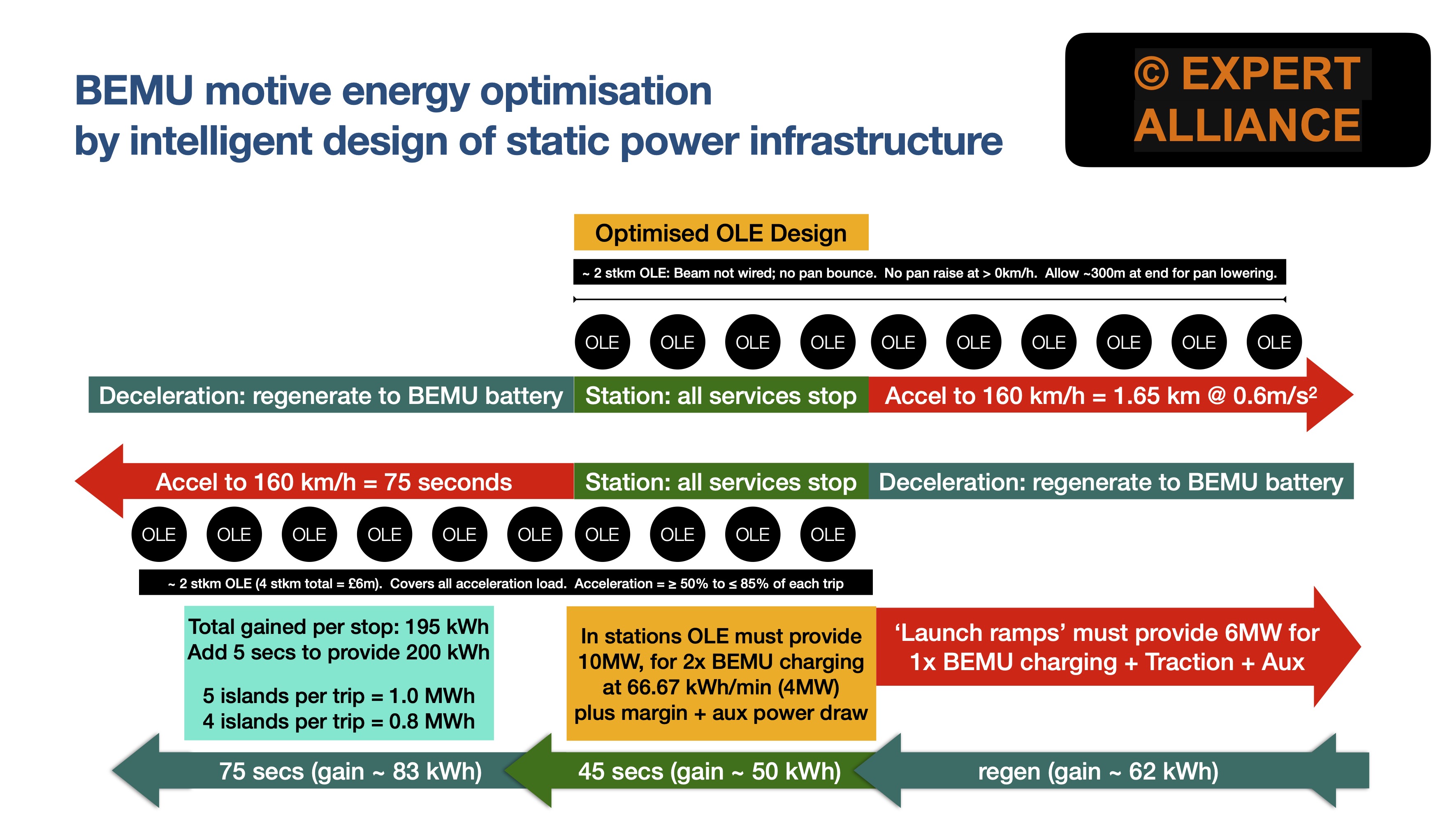
The core of this vision rested on deploying Energy Storage-equipped Electric Multiple Units that would charge dynamically whilst stopped in stations, or accelerating under short, intermittent sections of OLE. This strategy offered a profound shift from legacy thinking, allowing the railway to leverage smart charging logic similar to that successfully deployed at the domestic level, but at massive scale.
Energy Islands and Commercial Symbiosis
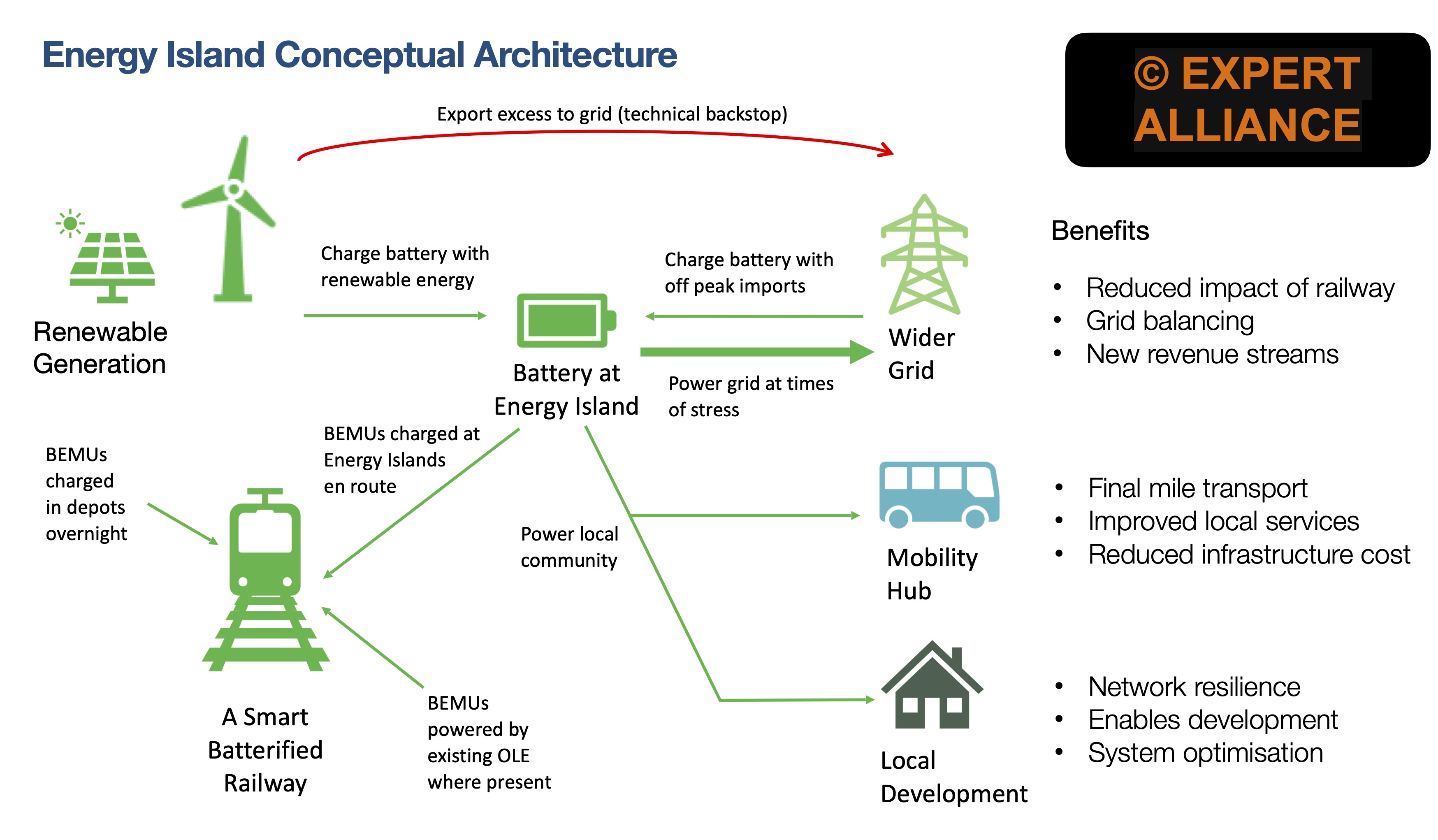
By replacing continuous copper wire with strategically placed "Energy Islands," the capital cost of electrification could be reduced to an estimated £73 million. Each island integrates significant local renewable generation, such as a 4MW wind turbine, with an 18MWh stationary Long Duration Energy Storage facility. This provides the railway with absolute operational resilience, enabling an Orderly Shutdown Protocol even during a total grid failure.
Crucially, we modelled a "Green Overspec" approach. While railway resilience only requires 6MWh of Energy Storage capacity per island, the additional 12MWh creates massive commercial opportunity. This surplus capacity actively balances the local grid, powers adjacent housing developments via Private Wire agreements, and fuels e-mobility transit hubs, generating hundreds of thousands of pounds in high-margin ancillary revenue per site, per year.
Validation of the Vision
This vision was fundamentally ahead of its time. We identified that the traditional approach to continuous OLE was prohibitively expensive and often unnecessary given the rapid advancements in Energy Storage technology. By treating the train not just as a vehicle, but as a mobile energy storage asset interacting with a strategically placed charging network, we demonstrated how massive capital cost savings could be achieved alongside broader societal decarbonisation.
Today, this strategy has moved from a visionary proposal to formal policy. East West Rail has now formally announced its plan to deliver this new railway using Energy Storage-equipped Electric Multiple Units for traction, running under intermittent Overhead Line Electrification exactly as we proposed. This external validation at a multi-billion-pound infrastructure scale underscores the profound strategic foresight that Expert Alliance brings to complex energy challenges.
East West Rail autumn announcement 2025 - Written statement to Parliament
"At the 2025 Spending Review, the government announced £2.5 billion to progress the next stages of the scheme. 'The updated proposals include: [...] partial/discontinuous electrification of the line to provide passenger services using hybrid battery-electric trains'"
- The Rt Hon Heidi Alexander MP, Secretary of State for Transport, 19 November 2025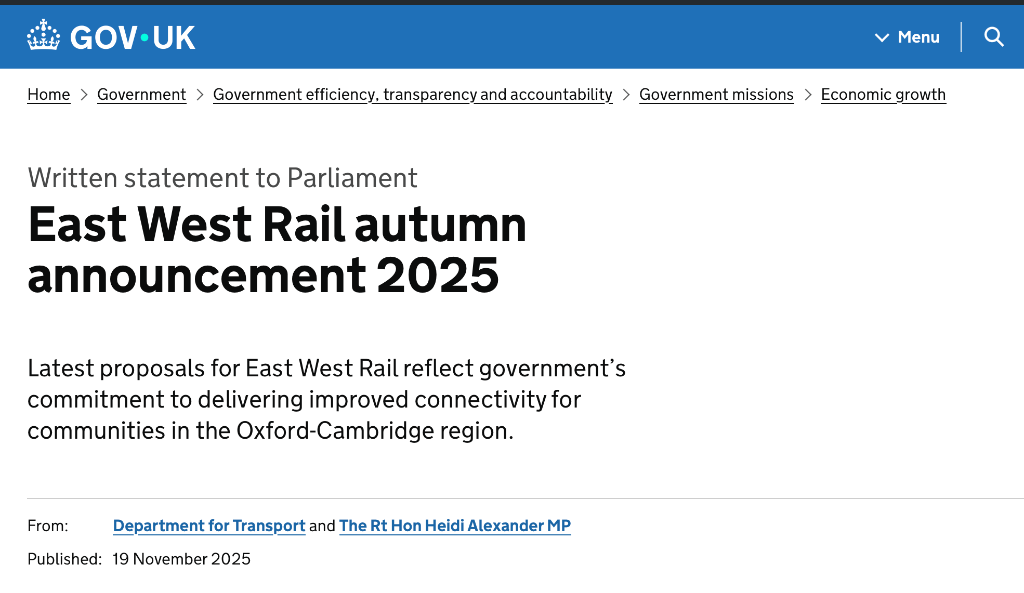
A personal connection...
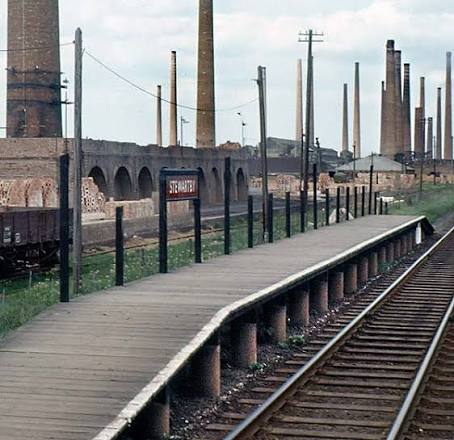
In a strange 'history comes full circle' coincidence, Expert Alliance founder Alan James used the central section of the EWR route to commute to school in the 1970s. This 'rump' line between Bedford and Bletchley was never closed, but seriously neglected and became very run down.
In a sign of changing times, the railway's main traffic at that time was bricks from the massive London Brick Company works at Stewartby. A reverse traffic flow then developed dumping London's household waste into the massive clay pits created by brick making. These services used Freightliner containers and were known by train crews as "Bin Liner" trains. Now into 21st Century, the hollowed-out vacuity of our times could not be made any clearer: a new station is to be built to transport people who could be doing something useful with their lives to waste their time and money in what will be Europe's largest theme park.